Hear Warren G. Harding's 1921 Hoboken address for the WWI dead, restored
Warren G. Harding's 1922 recording of his Hoboken address for 5,212 American war dead, before and after restoration with Diffio AI. Public domain audio, free for press and classroom use.
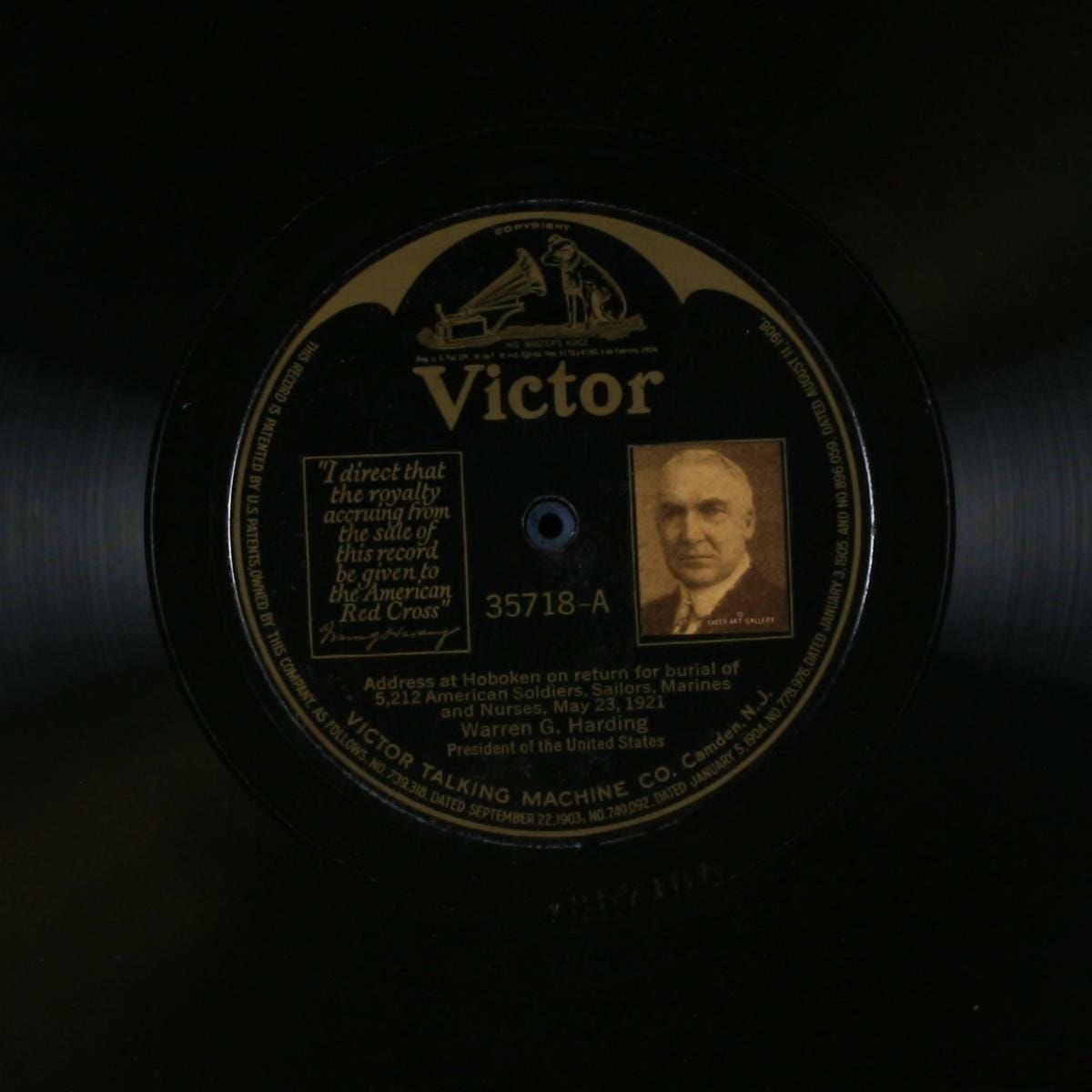
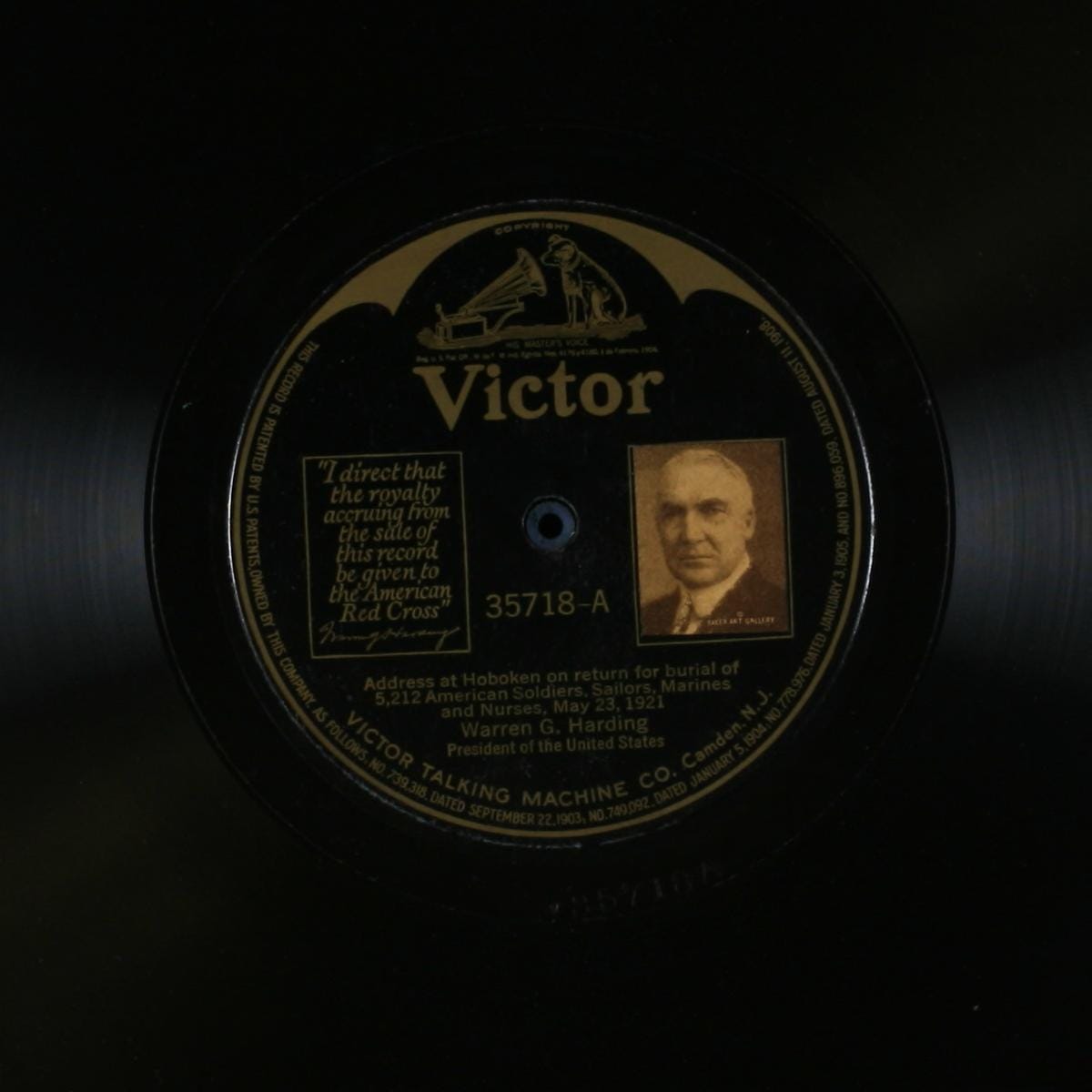
On May 23, 1921, President Warren G. Harding stood on Pier 4 in Hoboken, New Jersey, beside the coffins of 5,212 Americans who had died in the First World War and had just been brought home. A year and a day later, on May 24, 1922, he spoke the same address into a recording horn at the White House. Victor released the disc that November, with the proceeds going to the Red Cross.
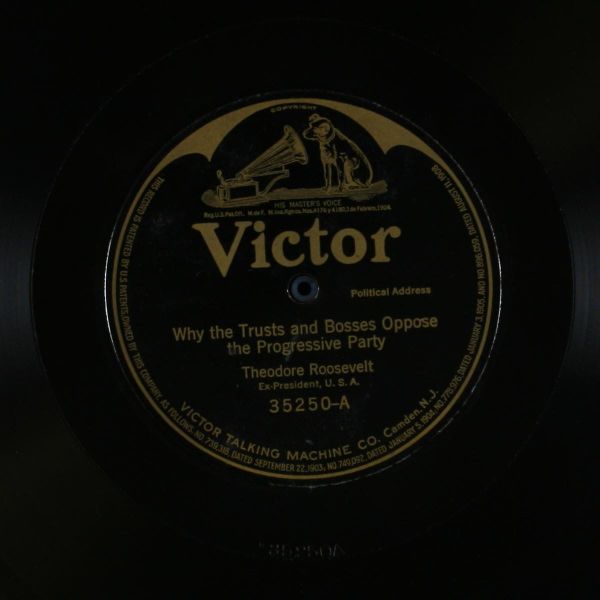
That disc survives, digitized by the Library of Congress for its National Jukebox. It is an acoustic recording, made without a microphone, and a century of surface noise sits on top of it: a roar of hiss and crackle with Harding's voice somewhere underneath. For Veterans Day we ran it through Diffio AI, our speech restoration tool. This page puts the original and the restoration side by side so anyone can hear both.
Listen: the 1922 recording as it survives
Listen: the same passage, restored with Diffio
Both clips are the same 35 seconds, the passage the speech is remembered for, and both are matched for loudness, so what changes is the noise and the voice, not the volume:
"One's words fail, his understanding is halted, his emotions are stirred beyond control when contemplating these thousands of beloved dead. I find a hundred thousand sorrows touching my heart, and there is ringing in my ears, like an admonition eternal, an insistent call, 'It must not be again. It must not be again.' God grant that it will not be, and let a practical people join in cooperation with God to the end that it shall not be."
Watch: 20 seconds, before and after
The full address
The whole 4 minute 25 second disc, before and after:
Original (Victor 35718-A, 1922)
Restored with Diffio
The 1922 recording is a little shorter than the speech Harding gave in Hoboken. A short passage near the end ("They gave all which men and women can give...") is not on the disc; the Library of Congress prints the full text with the omitted lines marked.
What changed
Diffio restores recorded speech. It separates the voice from everything else in the recording and rebuilds it so it sounds closer to a clean microphone. On this disc the surface noise drops away and Harding's voice, which on the original sits underneath it, comes forward.
The models are generative, which is why the result can be so much clearer than a noise filter manages on audio this old. It is also why we publish the original next to the restoration. We treat the restored file as a listening copy: the original stays exactly as the Library of Congress digitized it, and anyone quoting Harding should check the words against it and against the published text.
Six months later: the Unknown Soldier
On November 11, 1921, the third anniversary of the armistice, Harding presided at the burial of the Unknown Soldier at Arlington National Cemetery. This Veterans Day marks 105 years of the Tomb. The Hoboken address is the closest thing we have to hearing him speak about the war dead in his own voice, and the line at its center, "It must not be again," is one that every generation since has had reason to repeat.
The same kind of restoration works on recordings much closer to home: a grandfather's cassette about his service, a reel-to-reel of a Veterans Day service, an oral history taped in a noisy hall. If you have one, you can try Diffio on three uploads without a card.
For journalists, educators and museums
The original recording is in the public domain: it was first published in 1922, and U.S. sound recordings published before 1923 entered the public domain in 2022. The restored audio and the 20-second video on this page are free to use for press, classroom and museum work. Write to me at nathan.harmon@trydiffio.com if you'd like WAV files. Please credit "Audio: Warren G. Harding, Victor 35718-A (1922), Library of Congress National Jukebox; restored with Diffio AI (diffio.ai)".
Nathan Harmon is the founder of Diffio AI, based in Colorado Springs.